



Topdiode SiC MOSFET Introduction
Topdiode SiC MOSFET Silicon Carbide MOSFET solutions are the next essential step towards an energy-smart world. Topdiode SiC MOSFET technology represents the best performance, reliability, and ease of use for system designers. Silicon Carbide (SiC) power transistors open up new degrees of flexibility for designers to harness never before seen levels of efficiency and reliability. High voltage SiC MOSFET technology has also provided impressive improvements in reverse-recovery characteristics.
Topdiode SiC MOSFETs are designed to be fast and rugged and include system benefits from high efficiency to reduced system size and cost. Topdiode MOSFETs are metal oxide semiconductor field-effect transistors with insulated gates. These silicon carbide MOSFETs have a higher blocking voltage and higher thermal conductivity than silicon MOSFETs, despite having similar design elements. SiC power devices also have a lower state resistance and 10 times the breakdown strength of regular silicon. In general, Systems with SiC MOSFETs have better performance and increased efficiency when compared to MOSFETs made with silicon material.
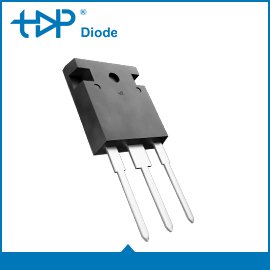
Topdiode Silicon-carbide (SiC) Power MOSFET
- Topdiode SiC MOSFETs Cross Guide
- Understanding Threshold Voltage in MOSFETs:
| Topdiode PN | Description | Vds(50uA) | ID(A)Tc=25℃ | VGS(V) | max. RDon | Ciss(pF) | Coss(pF) | QG(nC) | Package | Pin to Pin Cross | Pin to Pin Cross | Pin to Pin Cross |
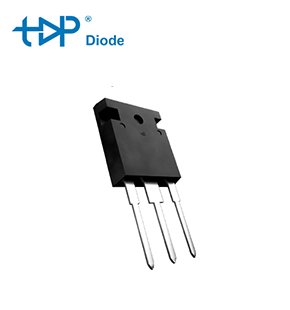
| TPMW280N120C1P | SIC Mos Single-N | 1200V | 14A | -5/+20 | 330mΩ | 442pF | 22pF | 31.3nC | TO-247-3 | ROHM SCT2280KE | ||
| TPMW160N120C1P | SIC Mos Single-N | 1200V | 32A | -5/+20 | 200mΩ | 1029pF | 69pF | 55.9nC | TO-247-3 | On Semi NTHL160N120SC1 | ROHM SCT2160KE | |
| TPMW120N120C1P | SIC Mos Single-N | 1200V | 33A | -5/+20 | 140mΩ | 995pF | 68pF | 56.6nC | TO-247-3 | On Semi NTHL160N120SC1 | ||
| TPMW80N120C1P | SIC Mos Single-N | 1200V | 44A | -5/+20 | 100mΩ | 1590pF | 78.4pF | 103nC | TO-247-3 | On Semi NTHL080N120SC1 | GREE C2M0080120D | |
| TPMW60N120C1P | SIC Mos Single-N | 1200V | 53A | -5/+20 | 80mΩ | 1700pF | 117pF | 94.8nC | TO-247-3 | Infineon IMW120R060M1HXKSA1 | ROHM SCT4062KE | |
| TPMW40N120C1P | SIC Mos Single-N | 1200V | 56A | -5/+20 | 55mΩ | 3120pF | 144pF | 196nC | TO-247-3 | On Semi NTHL040N120SC1 | ||
| TPMW30N120C1P | SIC Mos Single-N | 1200V | 77A | -5/+20 | 50mΩ | 3579pF | 233pF | 190nC | TO-247 | ROHM SCT3030KL | GREE C2M0040120D | On Semi NTHL022N120M3S |
Understanding Threshold Voltage in MOSFETs: A Core Parameter in Modern Semiconductor Devices
As one of the most essential building blocks in contemporary electronics, the Metal-Oxide-Semiconductor Field-Effect Transistor (MOSFET) represents a sophisticated interplay of semiconductor physics, material engineering, and advanced device design. Among the many parameters that govern its operation, the threshold voltage (Vth or Vt) stands out as one of the most critical. This parameter not only determines how a MOSFET turns on and off, but also directly influences power efficiency, switching behavior, noise margins, and overall circuit performance. A clear understanding of threshold voltage is therefore indispensable for both device engineers and circuit designers.
What Is Threshold Voltage in a MOSFET?
The threshold voltage of a MOSFET is defined as the minimum gate-to-source voltage (VGS) required to create a conductive inversion layer—commonly referred to as the channel—between the source and drain terminals. When VGS is below Vth, an N-channel MOSFET remains in the cutoff region, and essentially no drain current flows. As VGS reaches Vth, an inversion layer begins to form at the semiconductor-oxide interface, marking the onset of conduction. When VGS exceeds Vth, a well-defined channel is established, allowing the device to operate in the linear or saturation region depending on VDS.
For P-channel MOSFETs, the principle is analogous, with voltages reversed in polarity. Although the physical mechanisms are similar, differences in carrier type, substrate doping, and device structure result in distinct threshold voltage characteristics for PMOS and NMOS devices.
Factors Influencing Threshold Voltage
Threshold voltage is not a fixed value. Instead, it is shaped by various physical and environmental factors, many of which are inherent to semiconductor processes or operating conditions:
Temperature: As temperature increases, carrier mobility rises and intrinsic carrier concentration changes, generally causing Vth to decrease.
Process variations: Differences in oxide thickness, doping concentration, and interface charge density during fabrication can cause significant Vth variation across wafers or lots.
Device geometry: Short-channel devices exhibit effects such as DIBL (Drain-Induced Barrier Lowering) that reduce threshold voltage under high drain bias.
Body bias: Applying a substrate-to-source voltage shifts the threshold voltage due to the body effect, an important design consideration in analog and mixed-signal systems.
These dependencies highlight the dynamic nature of Vth and its impact on consistency and reliability in mass-produced semiconductor devices.
Importance in Circuit and System Design
From digital logic to high-efficiency power electronics, threshold voltage plays a decisive role in determining the behavior of electronic circuits:
Low-voltage operation: MOSFETs with low Vth are preferable in battery-powered or energy-constrained systems, enabling faster switching and reduced gate drive requirements.
Leakage trade-offs: Lower Vth improves performance but increases subthreshold leakage, a critical challenge in modern nanometer-scale CMOS technologies.
Switching performance: Accurate threshold voltage modeling allows designers to optimize switching speed, conduction losses, and dynamic power consumption.
Noise margin and reliability: Stable and predictable Vth ensures robust logic levels and reduces susceptibility to noise, aging, and environmental drift.
Thus, threshold voltage is a key parameter in achieving the right balance between efficiency, speed, and reliability.
Advanced Threshold Voltage Engineering
Modern semiconductor technologies employ sophisticated methods to tailor Vth for specific applications:
Channel engineering through precise doping profiles.
High-κ dielectric materials and metal gates to control work function and suppress leakage.
Dynamic Threshold MOSFETs (DTMOS), where the body is dynamically biased, effectively lowering Vth during operation to reduce power consumption.
Multi-Vth CMOS processes, enabling designers to choose different threshold options within the same chip for optimized power-performance trade-offs.
Such innovations reflect the continual effort to push the boundaries of energy efficiency and transistor scalability.
Threshold voltage remains a foundational concept that underpins the operation, design, and optimization of MOSFETs. Its influence extends from intrinsic device physics to system-level performance in microprocessors, power converters, and countless electronic products. As semiconductor technology continues to evolve—driven by demands for higher efficiency, lower power consumption, and greater integration—careful engineering and understanding of threshold voltage will remain a central theme. For students, researchers, and engineers alike, mastery of this parameter provides essential insight into both present and future generations of electronic devices.
Topdiode Silicon-carbide (SiC) Power MOSFET
There are many advantages to choosing SiC MOSFETs over silicon MOSFETs, such as higher switching frequencies. High-temperature development is also not a concern when using SiC MOSFET modules because these devices can operate efficiently even in high heat. Additionally, with SiC MOSFETs, you benefit from a more compact product size because all components (inductors, filters, etc.) are smaller.
Topdiode SiC MOSFET offers a series of advantages. These include the lowest gate charge and device capacitance levels seen in SiC switches, no reverse recovery losses of the anti-parallel diode, temperature-independent low switching losses, and threshold-free on-state characteristics.
Superior gate oxide reliability enabled by state-of-the-art trench design, best in class switching and conduction losses, highest transconductance level (gain), a threshold voltage of Vth = 4V and short-circuit robustness. This is the revolution you can rely on.
All this results in a robust Silicon Carbide MOSFET technology, ideal for hard- and resonant-switching topologies like LLC and ZVS, which can be driven like an IGBT or MOSFET with easy-to-use drivers. Delivering the highest-level efficiency at high switching frequencies allowing for system size reduction, power density increases, and high lifetime reliability.
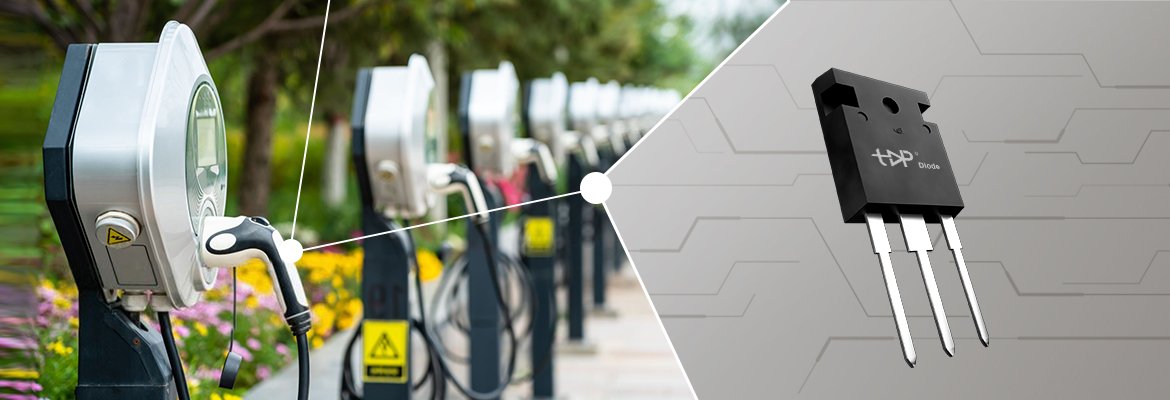
Why Should You Choose Topdiode as Your Semiconductor IC Chip Supplier?
Topdiode is a well-established semiconductor company with a rich history in the market.We have garnered strong recommendations from numerous international EMS/OEM customers, thanks to our exceptional reliability and outstanding performance.
In the IC and Semiconductors market, many customers have faced significant challenges with lead times when dealing with certain US and Japanese IC brands.However, with China’s increasing investment in IC CHIPS, Topdiode is able to offer an extensive range of IGBTs, driver ICs, audio ICs at more competitive prices and shorter lead times.
Moreover, we maintain regular stocks of transistors, IGBTs, MOSFETs, driver ICs, and audio ICs as a reliable supplier of IC CHIPS.Therefore it becomes imperative for businesses to find a local Chinese supplier for their IC needs.







Topdiode Group Factory
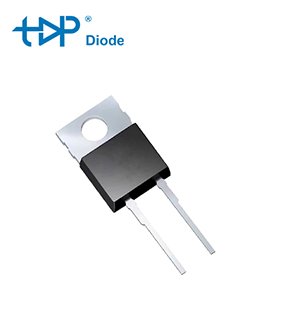
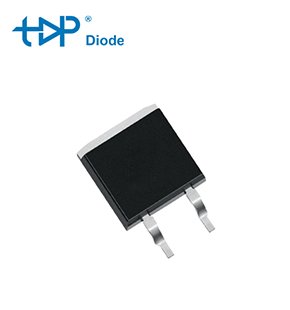
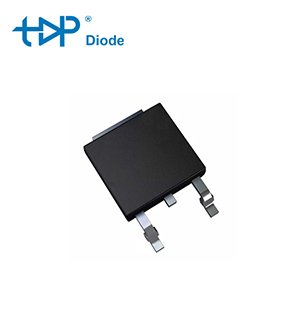
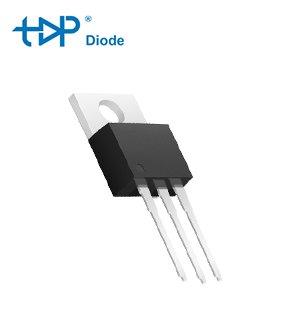
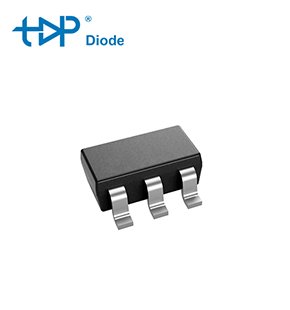
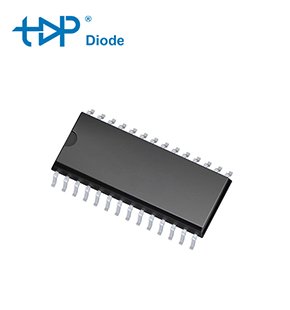
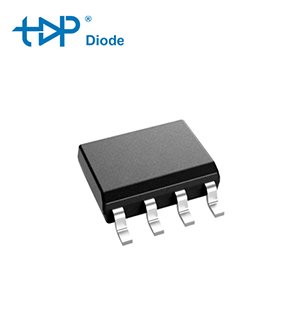
Topdoide Featured Products
-290X310.jpg)
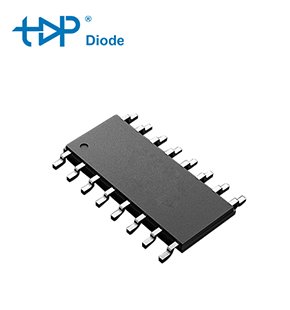
SiC MOSFET Manufacturer in China
Topdiode Manufacturing Company is a leading manufacturer and supplier of a wide range discrete components and capacitors in China. Discrete Semiconductors include Rectifier Diode, Switching Diode, Zener Diode, TVS Diode, Schottky Diode, Bi-directional Trigger Diode, Fast Recovery Diode, Bridge Rectifier THT & SMT, Small Signal Transistors; and capacitors range includes CA42 Dipped Tantalum Capacitors, CA45 Chip Tantalum Capacitors, CL21 Metallized Polyester Capacitors and CT4 multilayer ceramic capacitors.
Topdiode serves the consumer electronics, computing, communications, industrial markets, and military application. For detailed Company Profile, Cross Reference, Full Part List, Topdiode Catalogue, please visit Download.