


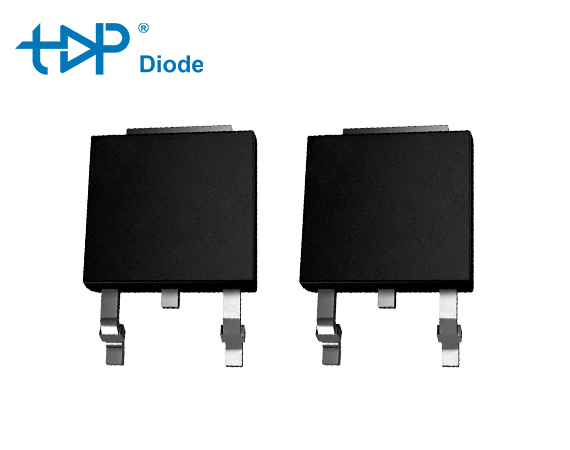
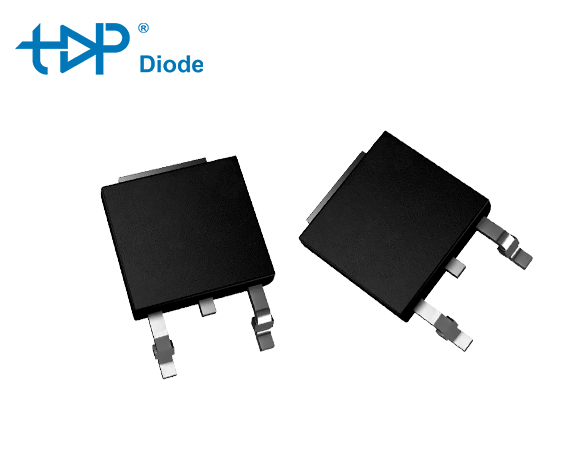
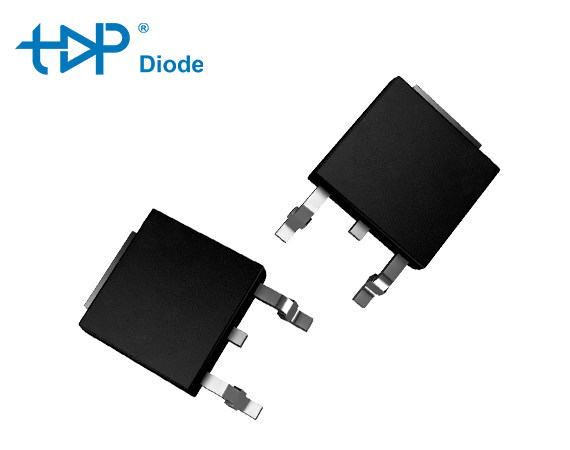
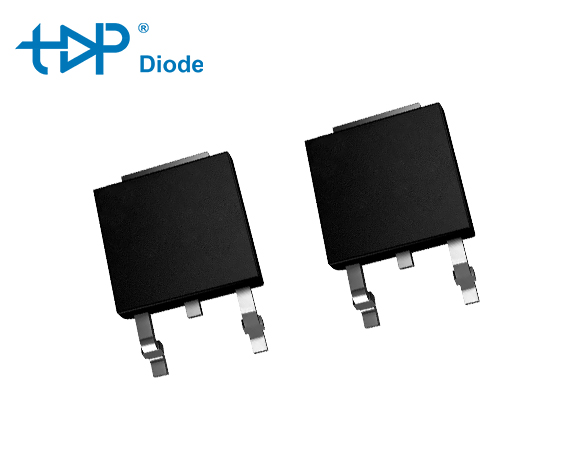
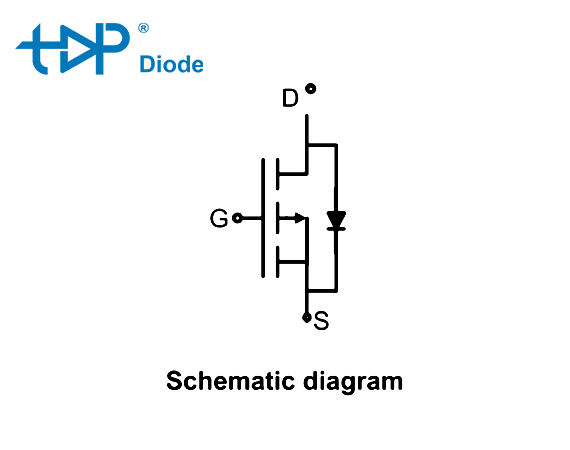
Topdiode TRIACs F08 Series 8A 800V F0810-8D
Glass Passivated Junctions
High voltage and surge capability
Low Thermal Resistance and Durability
Triggering in all four quadrants
Topdiode TRIACs F08 Series 8A 800V F0810-8D Description - Topdiode
Topdiode F0810-8D plastic single-ended surface-mounted package (DPAK); 3 leads (one lead cropped)
Topdiode TRIACs F08 Series 8A 800V F0810-8D DATA
- Tab
| ABSOLUTE MAXIMUM RATINGS | |||||||||||||||||||||||
| Parameter | Symbol | Value | Unit | ||||||||||||||||||||
| Storage junction temperature range | Tstg | -40 ~ 150 | ℃ | ||||||||||||||||||||
| Operating junction temperature range | Tj | -40~ 125 | ℃ | ||||||||||||||||||||
| Repetitive peak off-state voltage (T =25℃) | VDRM | 600/800 | V | ||||||||||||||||||||
| Repetitive peak reverse voltage (T =25℃) | VRRM | 600/800 | V | ||||||||||||||||||||
| Non repetitive surge peak Off-state voltage | VDSM | VDRM +100 | V | ||||||||||||||||||||
| Non repetitive peak reverse voltage | VRSM | VRRM +100 | V | ||||||||||||||||||||
| RMS on-state current | TO-220A(TC= 100℃) | IT(RMS) | 8 | A | |||||||||||||||||||
| TO-220B(TC= 107℃) | |||||||||||||||||||||||
| TO-220F(TC=95℃) | |||||||||||||||||||||||
| TO-251(TC= 107℃) | |||||||||||||||||||||||
| TO-252(TC= 107℃) | |||||||||||||||||||||||
| TO-262(TC=90℃) | |||||||||||||||||||||||
| TO-263(TC=90℃) | |||||||||||||||||||||||
| Non repetitive surge peak on-state current (180° conduction angle, F=50Hz) |
ITSM | 80 | A | ||||||||||||||||||||
| I2t value for fusing (tp= 10ms) | I2t | 32 | A2 S | ||||||||||||||||||||
| Critical rate of rise of on-state current (I =2×IGT, tr ≤ 100 ns) |
di/dt | 50 | A/μS | ||||||||||||||||||||
| Peak gate current | IGM | 4 | A | ||||||||||||||||||||
| Average gate power dissipation | PG(AV) | 1 | W | ||||||||||||||||||||
| Thermal Resistances | |||||||||||||||||||||||
| Symbol | Parameter | Value | Unit | ||||||||||||||||||||
| Rth(j-c) | Junction to case (AC) | TO-220A | 2.7 | ℃/W | |||||||||||||||||||
| TO-220B | 1.8 | ||||||||||||||||||||||
| TO-220F | 2.9 | ||||||||||||||||||||||
| TO-252/TO-252 | 2.1 | ||||||||||||||||||||||
| TO-262/TO-263 | 3.0 | ||||||||||||||||||||||
| ELECTRICAL CHARACTERISTICS (T=25℃unless otherwise specified) | |||||||||||||||||||||||
| Symbol | Test Condition | Quadrant | Value | Unit | |||||||||||||||||||
| 05 | 10 | ||||||||||||||||||||||
| IGT | VD=12V | Ⅰ-Ⅱ-Ⅲ | MAX | 5 | 10 | mA | |||||||||||||||||
| Ⅳ | 10 | 25 | V | ||||||||||||||||||||
| VGT | ALL | MAX | 1.3 | ||||||||||||||||||||
| VGD | VD=VDRM Tj=125℃ | ALL | MIN | 0.2 | V | ||||||||||||||||||
| IL | IG= 1.2IGT | Ⅰ-Ⅲ | MAX | 5 | 20 | mA | |||||||||||||||||
| Ⅱ-Ⅳ | 10 | 35 | |||||||||||||||||||||
| IH | IT=200mA | MAX | 5 | 20 | mA | ||||||||||||||||||
| dV/dt | VD=2/3VDRM Gate Open Tj=125℃ | MIN | 15 | 100 | V/μs | ||||||||||||||||||
| STATIC CHARACTERISTICS | |||||||||||||||||||||||
| Symbol | Parameter | Value(MAX.) | Unit | ||||||||||||||||||||
| VTM | ITM =11A tp=380μs | Tj =25℃ | 1.55 | V | |||||||||||||||||||
| IDRM | VD=VDRM VR=VRRM | Tj =25℃ | 5 | μA | |||||||||||||||||||
| IRRM | Tj = 125℃ | 1 | mA | ||||||||||||||||||||
Topdiode Hot Selling Products (6)
-
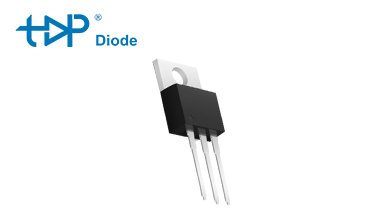
Topdiode Silicon-carbide (SiC) Schottky Barrier Diode, replace Infineon, On Semi, Littelfuse etc.
-
-
-
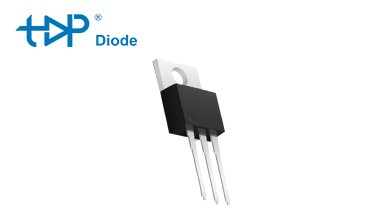
Topdiode Insulated Gate Bipolar Transistors (IGBT), replace Infineon, On semi, ST, AOS etc.
-
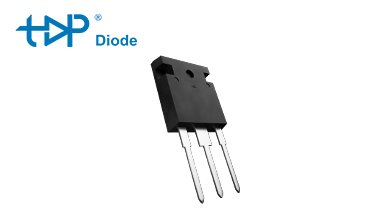
Topdiode Silicon-carbide (SiC) Power MOSFET, replace Infineon, On Semi, ROHM etc.
-
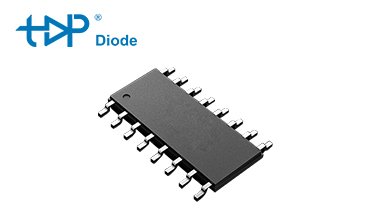
Topdiode Audio Amplifier Audio IC TPA2092 and TPA20957, replace Infineon IRS2092 and IRS20957S
SCRs and Triacs Datasheet
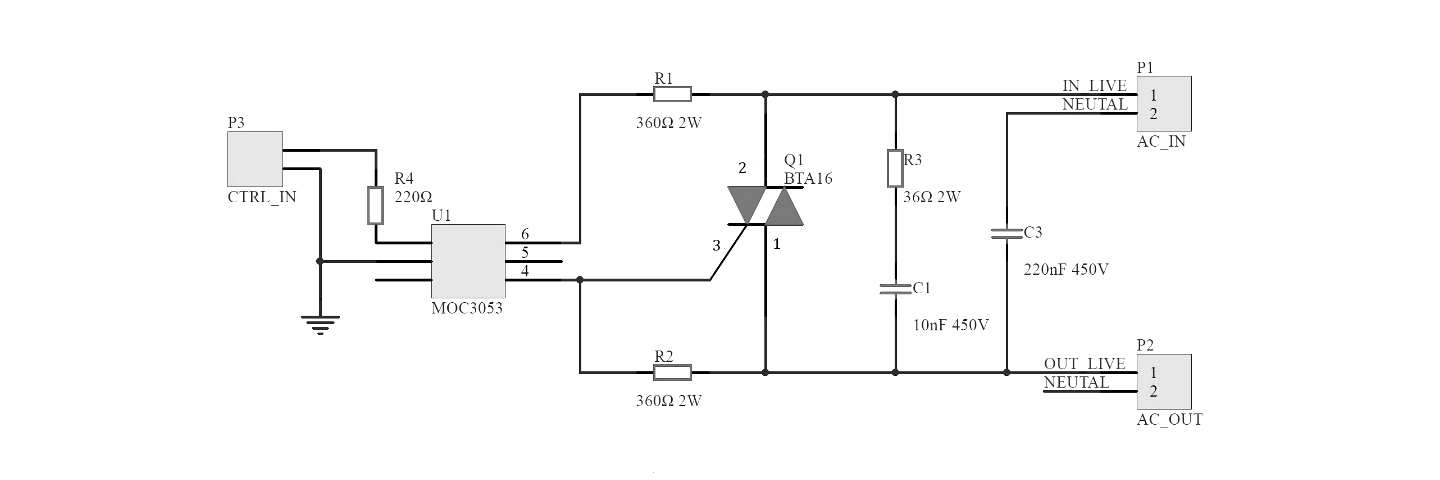
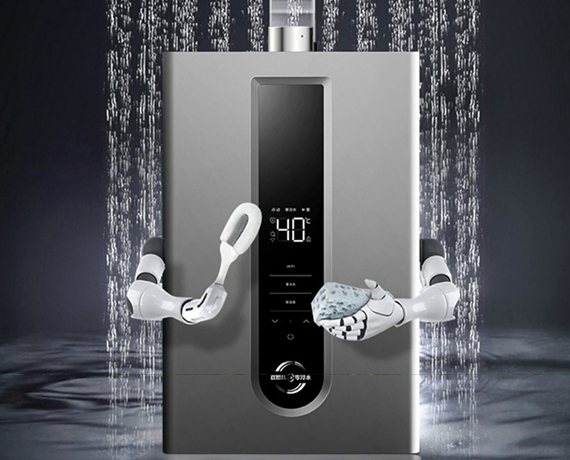
Thyristors are pivotal in instant water heaters, significantly enhancing their performance.
Precise Temperature Control, in an instant water heater, thyristors regulate the power supplied to the heating element. By precisely adjusting the electrical current, they ensure the water reaches the desired temperature quickly and accurately. For example, if you set the heater to 40°C, the thyristor monitors the temperature sensor data. If the water is too cold, it increases power to the heating element; if it’s getting too hot, it reduces the power.
Energy Efficiency, thyristors optimize energy usage. They only draw the necessary power to heat the water, preventing over – heating and energy wastage. This not only saves on electricity bills but also makes the heater more environmentally friendly. Their ability to fine – tune power based on real – time temperature needs ensures efficient operation, making them an essential component for instant water heaters.
Recommended Models:
T16 Series
T25 Series
Topdiode SCRs and Triacs Applications
A thyristor is a type of semiconductor device that acts as a switch, controlling the flow of electrical current in a circuit. Thyristors are typically used for switching and controlling high voltage or current in applications where the power must be turned on or off. They are made of four layers of semiconductor material (P-N-P-N) and typically have three terminals: anode, cathode, and gate.
Silicon Carbide Schottky Barrier Diodes are semiconductor devices that consist of a metal contact on a layer of n-type Silicon Carbide (SiC) material. The metal contact forms a Schottky barrier with the SiC material, which allows the flow of current in only one direction. SiC Schottky barrier diodes offer several advantages over conventional diodes, including lower forward voltage drop, shorter reverse recovery time, higher breakdown voltage, and higher temperature operation
SCR (Silicon Controlled Rectifier):
-
- Structure: An SCR is a type of thyristor that has a single direction of current flow. It has four layers (P-N-P-N) and three terminals: anode, cathode, and gate.
- Control: It is controlled by a gate signal. Once triggered, it remains in the “on” state (conducting) until the current flowing through it drops below a certain threshold (called the “holding current”).
TRIAC (Triode for Alternating Current):
-
- Structure: A TRIAC is similar to an SCR but can conduct current in both directions, making it suitable for AC applications. It has a similar structure but with an additional set of layers.
- Control: Like an SCR, a TRIAC is controlled by a gate signal, but it can conduct during both halves of an AC cycle, allowing bidirectional control.
Static relays
Heating regulation
In-duction motor starting circuits
Phase control operation in light dimmers
Motor speed controllers
- Topdiode produces TRIAC and SCR to replace tier 1 brands like ST, WeEn, Onsemi, Vishay etc.
- Cost down 30-60%
- Lead time around 3 weeks
- 100% guarantee quality