


Schottky Barrier Diode MBR10200BCT - Topdiode
- Low Forward Voltage Drop
- Excellent High Temperature Stability
- Patented Super Barrier Rectifier Technology
- Soft, Fast Switching Capability
- Lead Free Finish, RoHS Compliant (Note 1)
- “Green” Molding Compound (No Br, Sb)
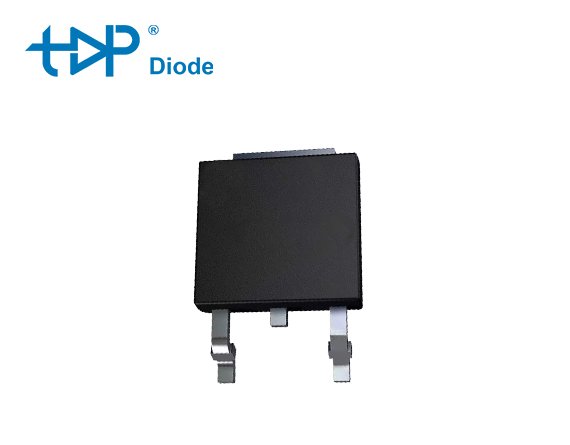
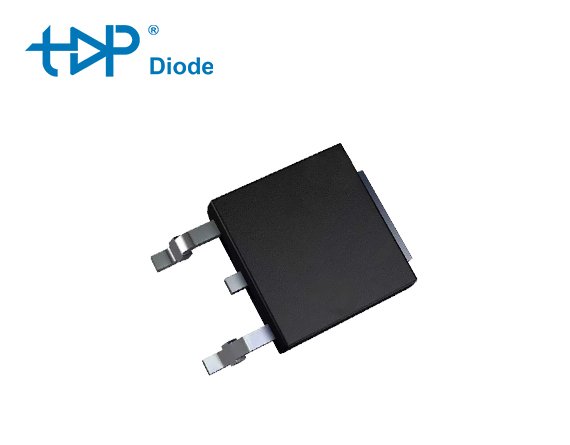
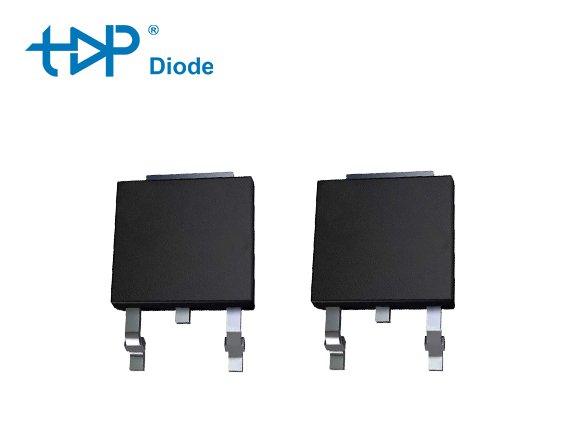
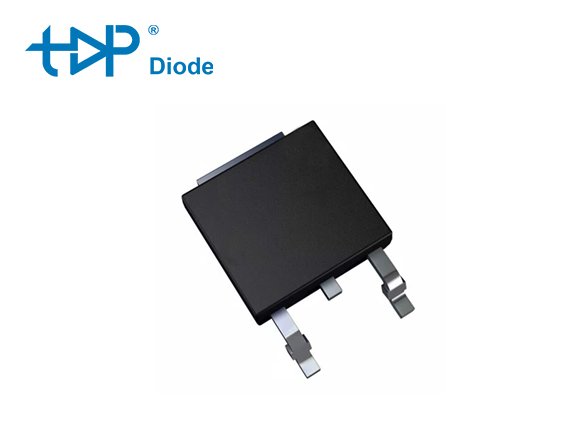
Topdiode Schottky Barrier Diode MBR10200BCT
Topdiode MBR10200BCT is a high-voltage dual Super Barrier Rectifier (SBR) designed for high-frequency and high-efficiency switching applications. It is widely used in switch-mode power supplies (SMPS), AC/DC adapters, DC/DC converters, LED lighting drivers, and freewheeling diode circuits where low forward voltage drop, low reverse leakage current, and high thermal reliability are required.
Topdiode MBR10200BCT is a great alternative offer for Diodes SBR10200CTL-13.
Topdiode Schottky Barrier Diode MBR10200BCT DATA
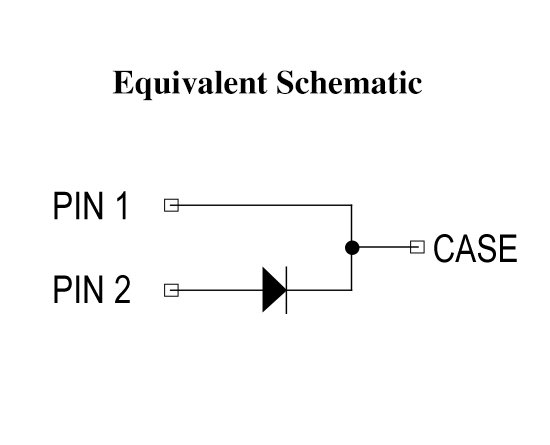
- Tab
Maximum Ratings (TA=25°C)
| RATINGS | SYMBOL | MBR 1040CT 1040FCT 1040BCT 1040DCT |
MBR 1045CT 1045FCT 1045BCT 1045DCT |
MBR 1060CT 1060FCT 1060BCT 1060DCT |
MBR 10100CT 10100FCT 10100BCT 10100DCT |
MBR 10150CT 10150FCT 10150BCT 10150DCT |
MBR 10200CT 10200FCT 10200BCT 10200DCT |
UNIT | |
| Maximum repetitive reverse voltage | VRRM | 40 | 45 | 60 | 100 | 150 | 200 | V | |
| Maximum RMS voltage | VRMS | 28 | 32 | 42 | 70 | 105 | 140 | V | |
| Maximum DC blocking voltage | VDC | 40 | 45 | 60 | 100 | 150 | 200 | V | |
| Maximum average per device forward current per diode |
IAV | 10 5 |
A | ||||||
| Peak forward surge current, 8.3ms single half sine-wave superimposed on rated load | IFSM | 150 | A | ||||||
| TO-220AB Typical thermal resistance ITO-220AB (Note 1) TO-252(DPAK) TO-263(D2 PAK) |
Rθ-JC | 2.0 4.5 3.5 2.5 |
°C/W | ||||||
| Operating junction temperature range | TJ | -55 to +150 | -55 to +175 | °C | |||||
| Storage temperature range | TSTG | -55 to +175 | °C | ||||||
| CHARACTERISTICS | SYMBOL | MBR 1040CT 1040FCT 1040BCT 1040DCT |
MBR 1045CT 1045FCT 1045BCT 1045DCT |
MBR 1060CT 1060FCT 1060BCT 1060DCT |
MBR 10100CT 10100FCT 10100BCT 10100DCT |
MBR 10150CT 10150FCT 10150BCT 10150DCT |
MBR 10200CT 10200FCT 10200BCT 10200DCT |
UNIT | |
| Maximum forward voltage per leg at IF=5A |
VF | 0.65 | 0.75 | 0.85 | 0.92 | V | |||
| Maximum average reverse TJ=25°C current at rated DC blocking TJ=125°C voltage | IR | 0.10 15 |
0.01 5 |
mA | |||||
Topdiode Hot Selling Products (6)
-
Topdiode Silicon-carbide (SiC) Schottky Barrier Diode, replace Infineon, On Semi, Littelfuse etc.
-
-
-
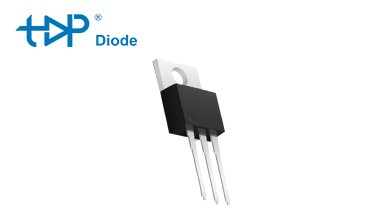
Topdiode Insulated Gate Bipolar Transistors (IGBT), replace Infineon, On semi, ST, AOS etc.
-
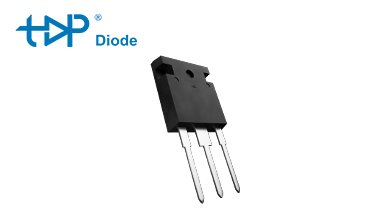
Topdiode Silicon-carbide (SiC) Power MOSFET, replace Infineon, On Semi, ROHM etc.
-
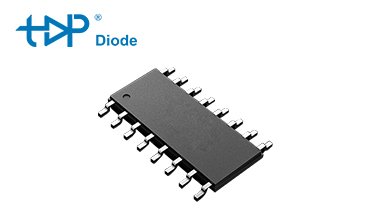
Topdiode Audio Amplifier Audio IC TPA2092 and TPA20957, replace Infineon IRS2092 and IRS20957S
SiC Schottky Barrier Diode Datasheet
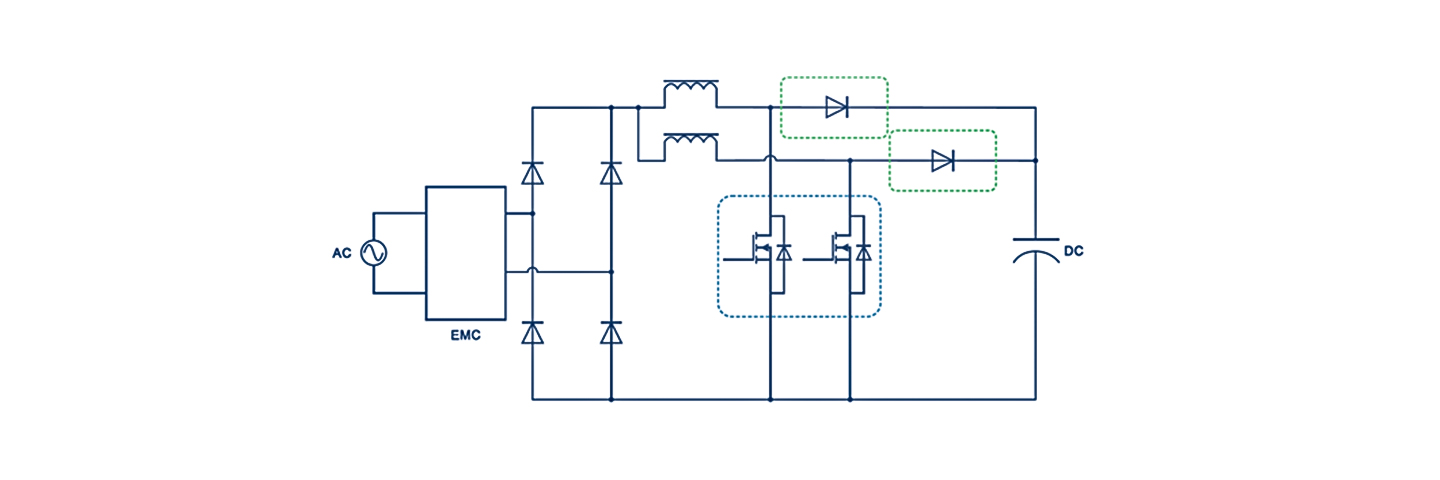
Topdiode SiC Schottky Barrier Diode Used on UPS (Server Power Supply)
The efficient use of electrical energy has evolved from a goal to a necessity as power-hungry consumer sectors experience exponential growth. Designers are abandoning outdated silicon solution and switch to Silicon Carbide SiC to gain system-level efficiencies with smaller, lighter and better thermal performance include LED lighting , USB Charger and Home appliance.
Topdiode Recommended Products:
SiC Diode:TPDA10S65C1P

Topdiode Silicon Carbide (SiC) Schottky Diode Applications



Silicon carbide (SiC), a semiconductor compound consisting of silicon (Si) and carbon (C), belongs to the wide bandgap (WBG) family of materials. Its physical bond is very strong, giving the semiconductor a high mechanical, chemical and thermal stability. The wide band gap and high thermal stability allow SiC devices to be used at junction temperatures higher than those of silicon, even over 200°C. The main advantage offered by silicon carbide in power applications is its low drift region resistance, which is a key factor for high-voltage power devices.
Silicon Carbide Schottky Barrier Diodes are semiconductor devices that consist of a metal contact on a layer of n-type Silicon Carbide (SiC) material. The metal contact forms a Schottky barrier with the SiC material, which allows the flow of current in only one direction. SiC Schottky barrier diodes offer several advantages over conventional diodes, including lower forward voltage drop, shorter reverse recovery time, higher breakdown voltage, and higher temperature operation
The working principle of a Silicon Carbide (SiC) Schottky diode is based on the metal-semiconductor junction known as the Schottky barrier. When a metal (typically aluminum or platinum) is deposited on a SiC substrate, a Schottky barrier is formed between the metal and the semiconductor material. Unlike traditional P-N junction diodes, the Schottky diode does not have a depletion region, which leads to a lower forward voltage drop and faster switching speed.
In forward bias, the metal contact is connected to the positive terminal of a voltage source, while the SiC substrate is connected to the negative terminal. When a positive voltage is applied, the electrons from the metal contact are injected into the SiC substrate, resulting in a flow of current through the device. The forward voltage drop in a SiC Schottky diode is typically lower than in a traditional P-N junction diode, which leads to lower power losses and higher efficiency.
In reverse bias, the metal contact is connected to the negative terminal of a voltage source, while the SiC substrate is connected to the positive terminal. When a negative voltage is applied, the Schottky barrier width increases, and the electric field across the device increases, leading to a breakdown of the device at a certain voltage, known as the reverse breakdown voltage. The reverse breakdown voltage of SiC Schottky diodes is typically higher than in traditional P-N junction diodes, which makes them suitable for high-voltage applications.
- Switching Mode Power Supplies (SMPS)
- AC/DC power adapters
- DC/DC converters
- LED Driver Power Supply
- Reverse Connection Protection and Hold-Up Circuit
Our SiC Schottky Barrier Diodes (SBDs) increase efficiency and add superior reliability in high-voltage applications. SiC diodes exhibit higher breakdown voltage with a lower forward voltage drop and a significantly shorter reverse recover time. SiC SBDs are designed with balanced surge current, forward voltage, thermal resistance and thermal capacitance ratings at low reverse current for lower switching loss, enabling more efficient power systems.