


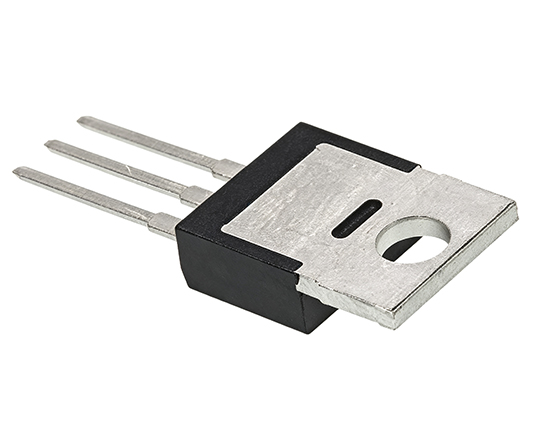
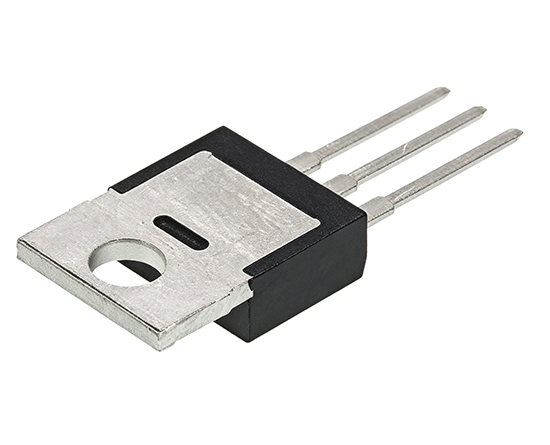
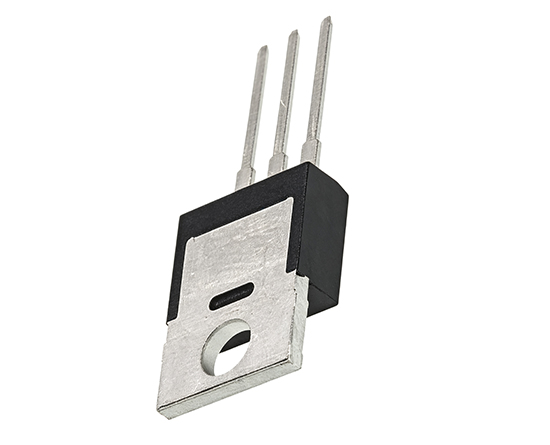
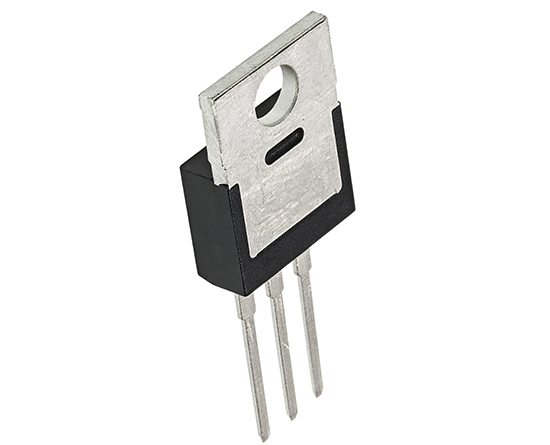
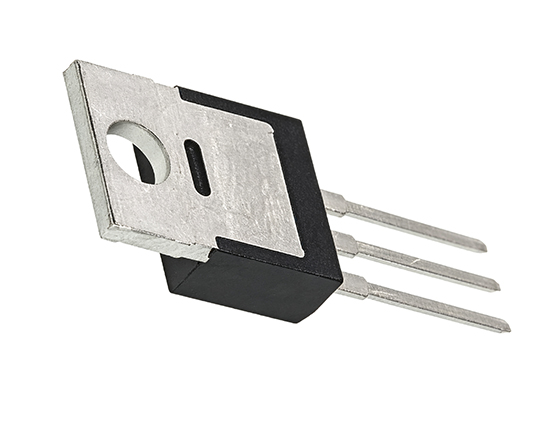
Topdiode MBR30L100CT is a nice alternative offer for onsemi NTSV30H100ECT
- Ultra low vf
- High efficiencty operation
- Low power loss
- Low stored charge majority carrier conduction
- High forwardsurgecapability
- Lead free in compliance with EU RoHS
- 2011/65/EU directive
Schottky Barrier Rectifiers MBR30L100CT Topdiode
Topdiode MBR30L100CT is a 30A, 100V Schottky Rectifier Diode designed for high-efficiency power rectification applications. It features low forward voltage, fast switching performance, and high current capability, making it suitable for switching power supplies, DC-DC converters, battery chargers, inverters, and industrial power electronics.
Topdiode MBR30L100CT is a nice alternative offer for onsemi NTSV30H100ECT
Topdiode 1Schottky Barrier Rectifiers MBR30L100CT DATA
- Tab
MAXIMUM RATINGS(TA=25℃)
| RATINGS | SYMBOL | MBR30L100CT | MBR30L100FCT | MBR30L100WCT | MBR30L100DCT | UNIT |
| Maximum repetitive reverse voltage | VRRM | 100 | V | |||
| Maximum RMS voltage | VRMS | 70 | V | |||
| Maximum DC blocking voltage | VDC | 100 | V | |||
| per device Maximum average forward current per device per diode |
IAV | 30 | A | |||
| 15 | ||||||
| Peak forward surge current, 8.3ms single haf sine-wave superimposed on rated load | IFSM | 300 | A | |||
| Typical thermal resistance per diode( Note 1) | Rθ-JC | 2 | 4.5 | 2.5 | 2.5 | °C/W |
| Operatng junction temperature range | TJ | -55 to +150 | °C | |||
| Storage temperature range | TSTG | -55 to +150 | °C | |||
ELECTRICAL CHARACTERISTICS(TA=25℃)
| PARAMETER | SYMBOL | TEST CONDITIONS | MIN. | TYP. | MAX. | UNIT | |
| Breakdown voltage per diode | VBR | IR=0.5mA | 100 | V | |||
| Instantaneous forward voltage per diode | VF | IF=15A TJ=25°C | 0.66 | 0.7 | V | ||
| IF=15A TJ=125°C | 0.64 | V | |||||
| Reverse current per diode | IR | VR=100V | TJ=25°C | 100 | uA | ||
| TJ=125°C | 30 | mA | |||||
Topdiode Hot Selling Products (6)
-
Topdiode Silicon-carbide (SiC) Schottky Barrier Diode, replace Infineon, On Semi, Littelfuse etc.
-
-
-
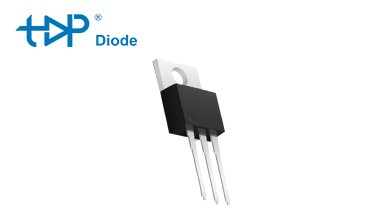
Topdiode Insulated Gate Bipolar Transistors (IGBT), replace Infineon, On semi, ST, AOS etc.
-
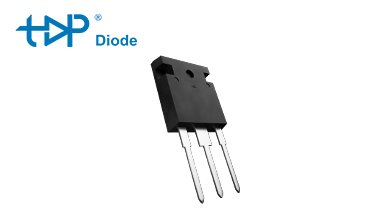
Topdiode Silicon-carbide (SiC) Power MOSFET, replace Infineon, On Semi, ROHM etc.
-
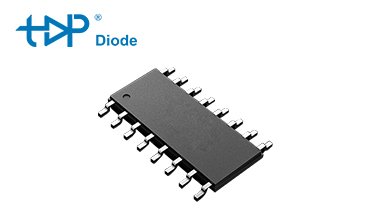
Topdiode Audio Amplifier Audio IC TPA2092 and TPA20957, replace Infineon IRS2092 and IRS20957S
SiC Schottky Barrier Diode Datasheet
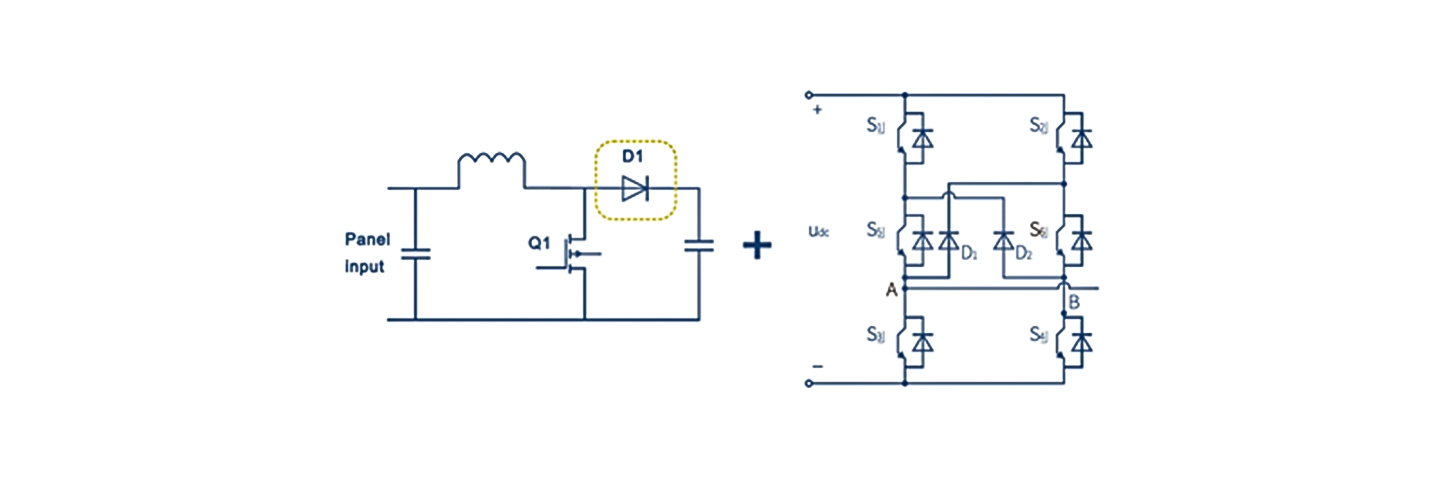
Topdiode SiC Schottky Barrier Diode Used on Photovoltaic Inverter
The advantage of solar power generation is that solar energy resources will never be exhausted, with zero emissions and a flexible layout of scales. Solar inverter is a kind of power electronic equipment that connects solar photovoltaic panels and the power grid. It first converts direct current into direct current to realize the maximum power tracking control function of solar energy, and then converts direct current into alternating current. By the number of AC output phases, it can be classified into single-phase inverters and three-phase inverters.
By electrical isolation, it can be classified into the isolated type and non-isolated type. According to the characteristics of inverters, a single-phase series inverter is selected for 220V projects, a three-phase series inverter is selected for 8KW-30KW projects, and a series inverter or centralized inverter can be selected for projects above 50KW according to the actual situation.
Traditional PV inverters must be matched with an isolation transformer, which usually reduces the efficiency by 2%. The new photovoltaic inverter adopts non-isolated inductance, featuring high power generation, high efficiency, small size and lightweight.
The SiC MOSFET and diode developed by APS will be an important force to promote inductor miniaturization with high frequency and low loss.
Topdiode Recommended Products:
SiC Diode:TPDB20A65C1P,TPDH40S65C1P,TPDH20S120C1P,TPDD40A120C1P,TPDH40S120C1P
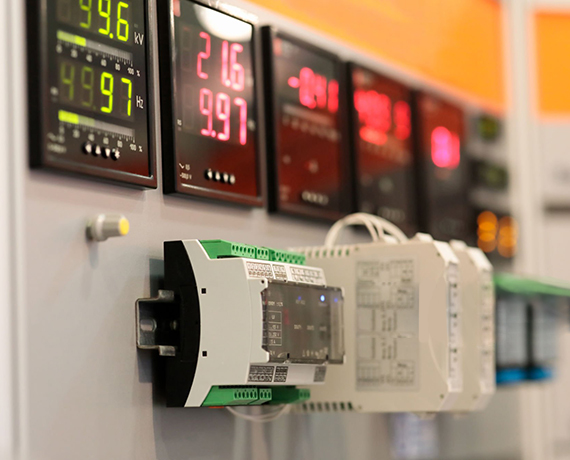
Topdiode Silicon Carbide (SiC) Schottky Diode Applications



Silicon carbide (SiC), a semiconductor compound consisting of silicon (Si) and carbon (C), belongs to the wide bandgap (WBG) family of materials. Its physical bond is very strong, giving the semiconductor a high mechanical, chemical and thermal stability. The wide band gap and high thermal stability allow SiC devices to be used at junction temperatures higher than those of silicon, even over 200°C. The main advantage offered by silicon carbide in power applications is its low drift region resistance, which is a key factor for high-voltage power devices.
Silicon Carbide Schottky Barrier Diodes are semiconductor devices that consist of a metal contact on a layer of n-type Silicon Carbide (SiC) material. The metal contact forms a Schottky barrier with the SiC material, which allows the flow of current in only one direction. SiC Schottky barrier diodes offer several advantages over conventional diodes, including lower forward voltage drop, shorter reverse recovery time, higher breakdown voltage, and higher temperature operation
The working principle of a Silicon Carbide (SiC) Schottky diode is based on the metal-semiconductor junction known as the Schottky barrier. When a metal (typically aluminum or platinum) is deposited on a SiC substrate, a Schottky barrier is formed between the metal and the semiconductor material. Unlike traditional P-N junction diodes, the Schottky diode does not have a depletion region, which leads to a lower forward voltage drop and faster switching speed.
In forward bias, the metal contact is connected to the positive terminal of a voltage source, while the SiC substrate is connected to the negative terminal. When a positive voltage is applied, the electrons from the metal contact are injected into the SiC substrate, resulting in a flow of current through the device. The forward voltage drop in a SiC Schottky diode is typically lower than in a traditional P-N junction diode, which leads to lower power losses and higher efficiency.
In reverse bias, the metal contact is connected to the negative terminal of a voltage source, while the SiC substrate is connected to the positive terminal. When a negative voltage is applied, the Schottky barrier width increases, and the electric field across the device increases, leading to a breakdown of the device at a certain voltage, known as the reverse breakdown voltage. The reverse breakdown voltage of SiC Schottky diodes is typically higher than in traditional P-N junction diodes, which makes them suitable for high-voltage applications.
- Switching Power Supplies including Notebook / Netbook Adapters,
- ATX and Flat Panel Display
- High Frequency and DC−DC Converters
- Freewheeling and OR−ing Diodes
- Reverse Battery Protection
- Instrumentation
Our SiC Schottky Barrier Diodes (SBDs) increase efficiency and add superior reliability in high-voltage applications. SiC diodes exhibit higher breakdown voltage with a lower forward voltage drop and a significantly shorter reverse recover time. SiC SBDs are designed with balanced surge current, forward voltage, thermal resistance and thermal capacitance ratings at low reverse current for lower switching loss, enabling more efficient power systems.