

How Bridge Rectifiers Work in Power Electronics
Bridge rectifiers are essential components in modern electronic systems. They are widely used to convert alternating current (AC) into direct current (DC), enabling electronic devices and power systems to operate properly.
From power adapters and industrial equipment to LED drivers and home appliances, bridge rectifiers play a critical role in power conversion circuits.
What Is a Bridge Rectifier?
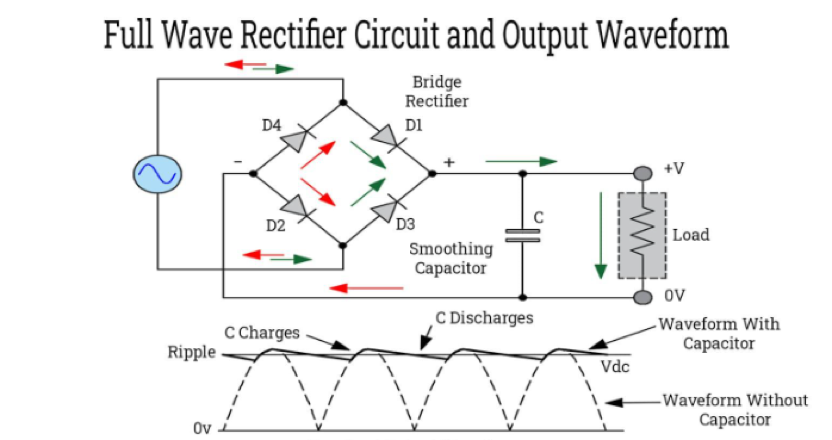
A bridge rectifier is a type of rectifier circuit that uses four diodes arranged in a bridge configuration to perform full-wave rectification.
Unlike half-wave rectifiers, bridge rectifiers utilize both the positive and negative halves of the AC input waveform, resulting in:
- Higher efficiency
- Smoother DC output
- Better power utilization
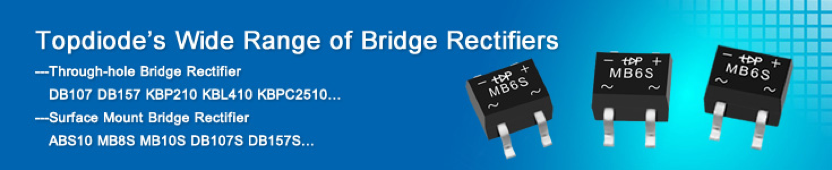
Bridge rectifiers are commonly available as:
- Single in-line packages
- Square bridge packages
- Surface-mount bridge rectifiers
- High-current industrial modules
Basic Working Principle
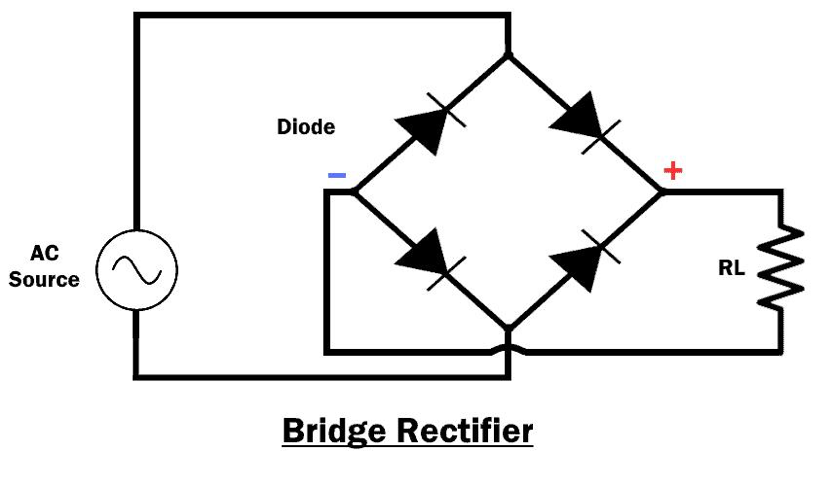
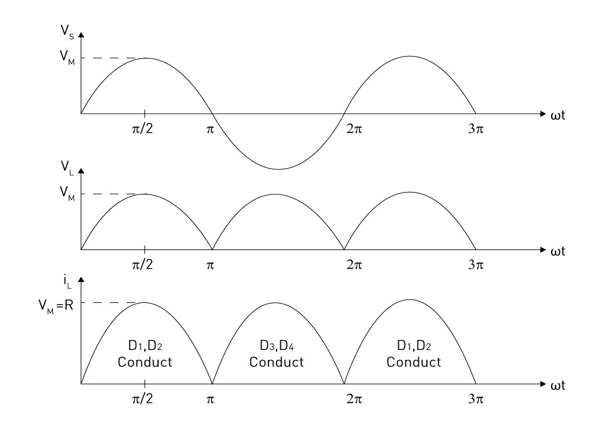
The primary function of a bridge rectifier is to convert AC voltage into pulsating DC voltage.
During the Positive Half Cycle
- Two diodes conduct
- Current flows through the load in one direction
During the Negative Half Cycle
- The other two diodes conduct
- Current still flows through the load in the same direction
As a result, the output polarity remains constant even though the AC input continuously changes direction.
This process is known as full-wave rectification.
Bridge Rectifier Circuit Structure
A standard bridge rectifier consists of four diodes connected in a bridge arrangement:
AC ~ ——- ~ | | |>| |<| | | +—+—- +DC | | |<| |>| | | +—+ | -DC This configuration eliminates the need for a center-tapped transformer and improves efficiency.
Output Waveform
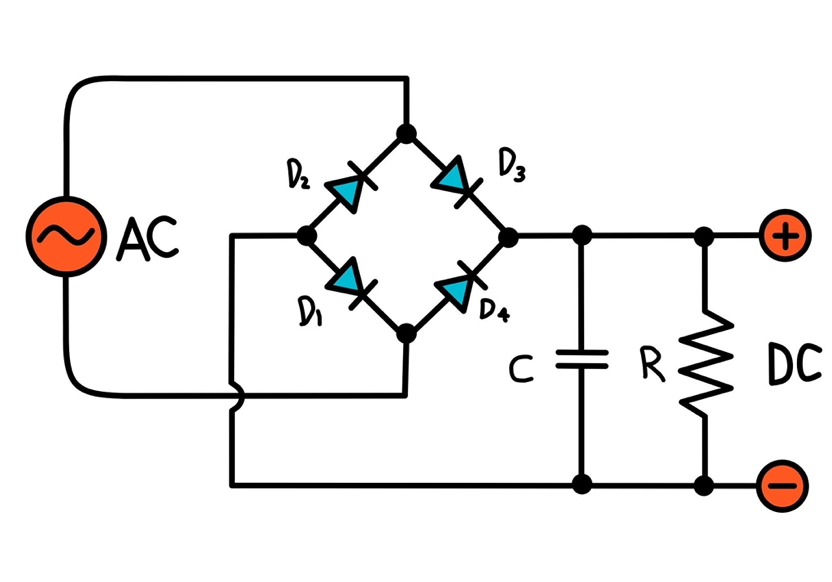
After rectification, the output voltage becomes pulsating DC. In most applications, capacitors are added after the bridge rectifier to smooth the waveform and reduce ripple voltage.
The combination of:
- Bridge rectifier
- Filter capacitor
- Voltage regulation stage
forms the foundation of many DC power supplies.
Advantages of Bridge Rectifiers
Higher Efficiency
Because both halves of the AC waveform are used, bridge rectifiers provide better efficiency than half-wave rectifiers.
Simple Structure
The circuit design is straightforward and reliable.
No Center-Tapped Transformer Required
This reduces transformer complexity and cost.
Wide Voltage and Current Range
Bridge rectifiers are available for:
- Low-power consumer electronics
- Industrial high-current systems
- Automotive applications
Common Applications of Bridge Rectifiers
Bridge rectifiers are widely used in:
Power Supplies
AC-DC conversion in adapters, chargers, and industrial power systems.
LED Drivers
Converting AC mains voltage into DC for LED lighting systems.
Motor Drives
Supplying DC power to motor control circuits.
Home Appliances
Used in TVs, washing machines, air conditioners, and kitchen appliances.
Industrial Equipment
Found in welding machines, automation systems, and inverter circuits.
Important Parameters When Selecting a Bridge Rectifier
Engineers usually evaluate the following specifications:
| Parameter | Description |
| Reverse Voltage (VRRM) | Maximum reverse voltage capability |
| Forward Current (IF) | Average current handling capability |
| Surge Current (IFSM) | Maximum non-repetitive surge current |
| Forward Voltage Drop (VF) | Power loss during conduction |
| Package Type | Thermal and mounting considerations |
Proper thermal management is also important for long-term reliability.
Common Bridge Rectifier Problems
Overheating
Excessive current or insufficient cooling may damage the device.
Voltage Spikes
Input surge voltage can stress the rectifier.
Incorrect Current Rating
Using undersized rectifiers may shorten lifespan.
Poor PCB Layout
Improper heat dissipation can reduce reliability.
To improve protection, bridge rectifiers are often used together with:
- TVS diodes
- MOV varistors
- NTC thermistors
Bridge Rectifier Solutions from Topdiodes
Topdiodes provides a wide range of bridge rectifiers for consumer, industrial, and power electronics applications.
Our product range includes:
- Single-phase bridge rectifiers
- Surface-mount bridge rectifiers
- High-current bridge modules
- Fast recovery rectifier solutions
Key Benefits:
- Stable and reliable quality
- High surge current capability
- Competitive replacement solutions
- RoHS compliant
- Short lead times
We support customers worldwide with semiconductor replacement and cross-reference solutions for power supply and industrial designs.