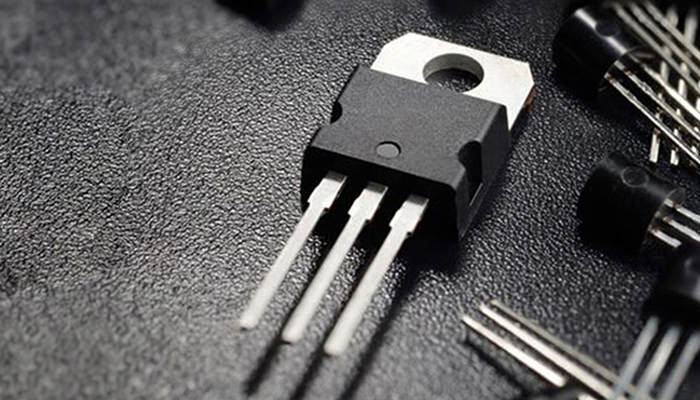


SCR vs TRIAC: Key Differences, Working Principles, Applications and Selection Guide
SCRs and TRIACs are thyristor-based semiconductor switches widely used in power-control circuits. Both devices can control large amounts of electrical power with a relatively small gate signal, but they are designed for different current directions, circuit structures and application requirements.
An SCR (Silicon Controlled Rectifier) conducts current mainly in one direction, while a TRIAC (Triode for Alternating Current) can conduct in both directions. As a result, SCRs are commonly selected for controlled rectification and higher-power systems, while TRIACs are often used for compact AC switching and phase-control applications such as dimmers, fan controllers and heating equipment.
This guide explains how SCRs and TRIACs work, compares their main differences and outlines the electrical parameters engineers should evaluate before selecting a device.
What Is an SCR?
An SCR, also known as a Silicon Controlled Rectifier, is a three-terminal thyristor that conducts current from the anode to the cathode after receiving a suitable gate-trigger signal.
The three SCR terminals are:
- Anode (A)
- Cathode (K)
- Gate (G)
Before triggering, the SCR remains in a blocking state. When sufficient gate current is applied, the device switches into conduction. It then remains on even after the gate signal is removed, provided that the current stays above the specified holding-current level.
In an AC circuit, an SCR normally turns off when the current passes through zero and falls below the holding current. Because it conducts in only one direction, one SCR controls only one polarity of the waveform unless additional devices or a different circuit topology are used.
Key Features of SCRs
- Unidirectional current conduction
- High voltage and current capability
- Low on-state conduction loss
- Reliable operation in demanding power systems
- Suitable for controlled rectification and high-power switching
What Is a TRIAC?
A TRIAC is a bidirectional thyristor developed specifically for controlling alternating current. It can conduct during both the positive and negative half-cycles of an AC waveform after receiving an appropriate gate-trigger signal.
The three TRIAC terminals are:
- Main Terminal 1 (MT1)
- Main Terminal 2 (MT2)
- Gate (G)
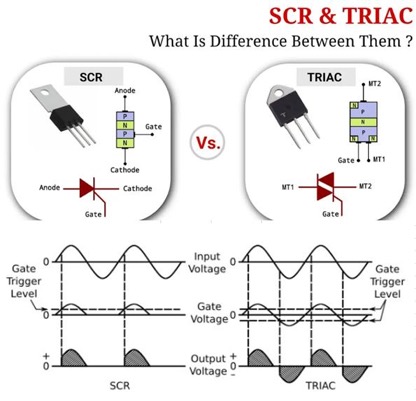
A TRIAC can be understood functionally as two SCR structures connected in inverse parallel with a shared gate. This bidirectional behavior allows one device to control both halves of an AC waveform, simplifying many mains-powered switching and phase-control circuits.
Key Features of TRIACs
- Bidirectional current conduction
- Direct control of both AC half-cycles
- Compact circuit design
- Suitable for phase-angle control
- Commonly used in consumer, appliance and general AC-control applications
SCR vs TRIAC: Main Differences
| Comparison Item | SCR | TRIAC |
|---|---|---|
| Current direction | Unidirectional | Bidirectional |
| AC waveform control | A single SCR controls one polarity; full-wave control requires an additional topology or device arrangement | One TRIAC can control both AC half-cycles |
| Typical power range | Commonly used in medium- to very-high-power systems | Commonly used in low- to medium-power AC-control circuits |
| Control precision | Well suited to controlled rectification and precise high-power control | Simplifies bidirectional AC switching and phase control |
| Commutation behavior | Generally more robust in demanding high-power circuits | Requires careful evaluation with inductive loads and high dv/dt conditions |
| Typical applications | Controlled rectifiers, industrial drives, soft starters and power converters | Light dimmers, fan controllers, heaters, appliances and AC solid-state switching |
How Does an SCR Work?
An SCR controls current through a latching switching process:
- The SCR initially blocks forward current.
- A gate pulse is applied between the gate and cathode.
- The device switches into its conducting state.
- Current flows from the anode to the cathode.
- The SCR remains on until the current falls below the holding current.
In phase-controlled rectifier circuits, engineers adjust the firing angle of the SCR to control when conduction begins during each positive AC half-cycle. Earlier triggering increases the average output voltage or power, while later triggering reduces it.
How Does a TRIAC Work?
A TRIAC also remains off until a sufficient gate pulse is applied. Once triggered, it conducts between MT1 and MT2 and remains on until the current falls below the holding-current level.
Because the device can conduct in both directions, it can be triggered during either half of an AC waveform. By changing the trigger timing during each half-cycle, the circuit controls the conduction angle and therefore the average power delivered to the load.
- Earlier triggering: longer conduction time and higher power output
- Later triggering: shorter conduction time and lower power output
This operating method is known as phase-angle control and is widely used in lighting, heating and compatible AC motor-control systems.
Common SCR Applications
Industrial Motor Control
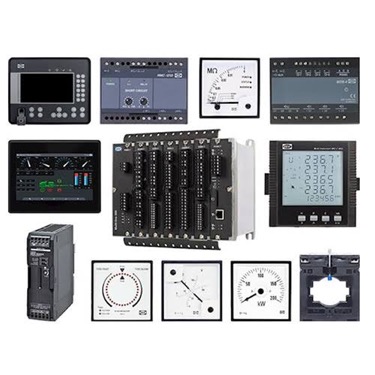
SCRs are used in motor drives, soft starters and speed-control systems where high voltage, high current and controlled power delivery are required.
Controlled Rectifiers and Power Conversion
SCRs are widely used in AC-to-DC conversion systems because their firing angle can regulate the average DC output voltage.
Battery Charging Systems
High-current battery chargers can use SCRs to regulate charging current and output voltage under demanding operating conditions.
Soft Starters
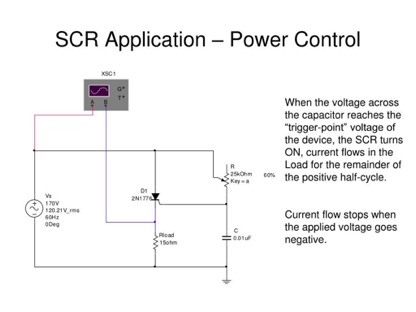
Industrial soft starters use thyristor control to reduce the voltage applied to a motor during startup, helping limit inrush current and mechanical stress.
Industrial Heating and Power Regulation
SCRs are suitable for high-power heating systems and industrial power regulators that require reliable switching over long operating periods.
Common TRIAC Applications
Lighting Control
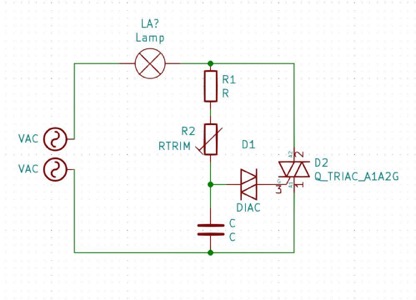
TRIACs are commonly used in incandescent lamp dimmers and compatible dimmable LED circuits. The trigger angle determines the portion of each AC half-cycle supplied to the lamp.
Fan and Motor Speed Control
TRIACs can regulate compatible single-phase AC motors used in ceiling fans, blowers, pumps and household appliances. Motor type, startup current and commutation conditions must be evaluated before selection.
Heating Control
Electric heaters, ovens and temperature-control systems can use TRIACs for on/off switching, burst control or phase-angle power regulation.
Home Appliances
TRIACs are commonly found in washing machines, vacuum cleaners, kitchen equipment and other appliances that require compact AC load control.
AC Solid-State Relays
Optically isolated TRIAC drivers and power TRIACs can provide contactless AC switching with low control power and no mechanical contact wear.
Important Parameters When Selecting an SCR or TRIAC
Repetitive Peak Off-State Voltage
The repetitive peak off-state voltage rating, commonly identified as VDRM and VRRM, must exceed the maximum line voltage and include an appropriate margin for switching transients and supply variation.
On-State Current Rating
The SCR or TRIAC current rating must support the continuous RMS load current under the actual case temperature, heatsink condition and PCB environment. The datasheet current rating should not be treated independently of thermal conditions.
Gate-Trigger Current
The gate-trigger current, IGT, determines the drive current needed to turn on the device. Lower-IGT components are easier to drive from optocouplers or low-power control circuits, but the complete trigger circuit and noise immunity must also be considered.
Holding and Latching Current
The latching current determines the minimum main-terminal current required immediately after triggering, while the holding current is the level below which the device turns off. Both parameters are important with low-current and highly variable loads.
Surge-Current Capability
The non-repetitive surge-current rating, ITSM, is critical for loads with high startup current, capacitor charging, lamp inrush or temporary overload conditions.
dv/dt and di/dt Capability
A high rate of voltage rise can cause unintended triggering, while excessive current rise can create localized heating. Snubber circuits, gate resistors and suitable device selection may be required in electrically noisy or inductive systems.
Commutation Performance
TRIAC commutation capability is especially important when controlling inductive loads because current and voltage may not cross zero at the same time. A high-commutation or three-quadrant TRIAC may be preferred for demanding motor and transformer loads.
Thermal Resistance and Package Type
Engineers should verify junction-to-case thermal resistance, maximum junction temperature, package insulation and heatsink requirements. Insulated and non-insulated packages can require different mounting arrangements.
Should You Choose an SCR or a TRIAC?
Choose an SCR when the design requires unidirectional controlled conduction, controlled rectification, higher current or voltage capability, or robust performance in industrial power systems.
Choose a TRIAC when one semiconductor device must control both halves of an AC waveform and the application benefits from a simpler, compact phase-control or on/off switching circuit.
| Application Requirement | Device Commonly Considered |
|---|---|
| Controlled AC-to-DC rectification | SCR |
| High-power industrial motor control | SCR or anti-parallel SCR pair |
| Compact control of both AC half-cycles | TRIAC |
| Light dimming and heater control | TRIAC |
| Demanding inductive AC load | High-commutation TRIAC or anti-parallel SCR solution, depending on the design |
SCR and TRIAC Solutions from Topdiodes
Topdiodes provides thyristor-based semiconductor devices for AC power-control applications, including:
- SCR thyristors
- Standard TRIACs
- Sensitive-gate TRIACs
- Four-quadrant TRIACs
These devices can be evaluated for industrial control systems, lighting control, motor control, home appliances and power-management equipment.
When replacing an existing SCR or TRIAC, engineers should compare the complete datasheet rather than relying only on voltage and current ratings. Gate sensitivity, holding current, latching current, surge capability, dv/dt, commutation performance, package dimensions, pin configuration and thermal resistance should all be verified.
What is the main difference between an SCR and a TRIAC?
An SCR conducts mainly in one direction, while a TRIAC conducts in both directions. This allows one TRIAC to control both halves of an AC waveform.
Can a TRIAC replace two SCRs?
In some lower- and medium-power AC-control circuits, one TRIAC can perform the bidirectional switching function of two inverse-parallel SCRs. However, the devices are not automatically interchangeable because current rating, voltage rating, gate drive, commutation performance, thermal behavior and fault conditions may differ.
Which device is better for high-power applications?
SCRs are generally preferred for very-high-power industrial applications because they are available with high voltage and current capability and can provide robust control. The final choice depends on circuit topology and operating conditions.
Why are TRIACs commonly used in light dimmers?
A TRIAC can control both AC half-cycles with one device. Adjusting its trigger angle changes the average power supplied to the lamp, making the circuit compact and efficient.
Can SCRs and TRIACs be driven by a microcontroller?
Yes, but a microcontroller normally drives them through an appropriate gate-driver or optocoupler circuit. The driver must supply sufficient trigger current and meet the required electrical-isolation and safety standards.
What should be checked before replacing an SCR or TRIAC?
Check VDRM and VRRM, current rating, IGT, holding and latching current, ITSM, dv/dt, di/dt, commutation capability, package, pinout, insulation and thermal resistance. Testing under the actual load is recommended.
Conclusion
SCRs and TRIACs are both important thyristor devices, but they address different power-control requirements. SCRs provide unidirectional switching and are widely used in controlled rectification and higher-power industrial systems. TRIACs provide bidirectional conduction and simplify AC dimming, heating, appliance and general-purpose mains-control circuits.
Selecting the correct device requires more than comparing nominal voltage and current. Gate-trigger requirements, holding current, surge capability, commutation behavior, thermal design and the characteristics of the actual load must all be considered.
For SCR and TRIAC datasheets, samples, replacement assistance or quotation information, contact the Topdiodes technical support or sales team.