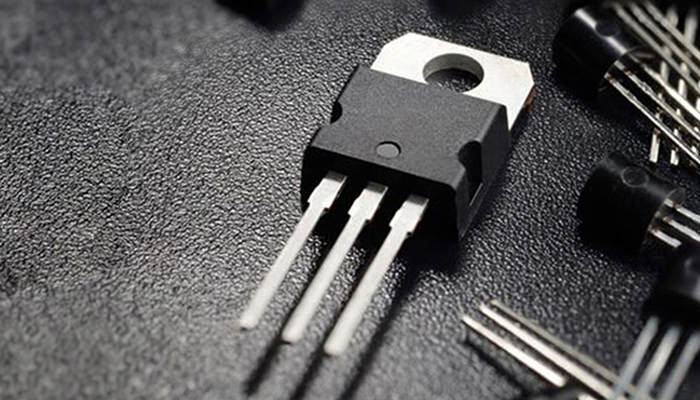


1117E low-dropout three-terminal regulator
Low-dropout three-terminal regulator
A low-dropout (LDO) three-terminal regulator is a linear voltage regulator that can operate with a very small input-to-output voltage differential (typically), maintaining regulation even when the input voltage is close to the output voltage. It has three pins—input, output, and ground—and is used for efficient, low-noise power regulation, particularly in battery-powered devices
Key Features and Details
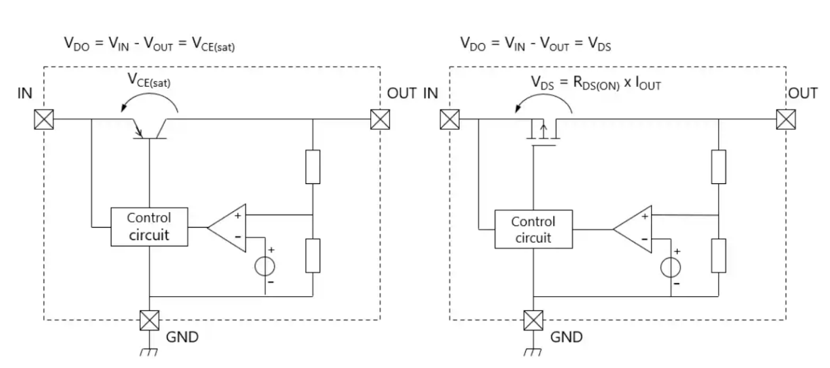
Low Dropout Voltage (Vdo)): The minimum voltage difference needed to maintain regulation is low, reducing power dissipation(Ploss=I *(Vin-Vout)
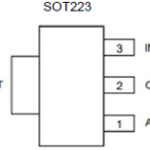
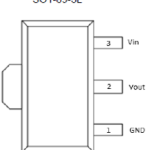
Three Terminals: Standardly configured with IN, OUT, and GND pins, often designed to be compatible with older linear regulator footprints
Components: Utilizes a power-pass transistor—usually a PNP transistor or a PMOS transistor—to achieve this low dropout voltage.
Applications
Ideal for battery-powered systems,
portable consumer electronics,
cellular phones,
and as post-regulators for switching power supplies to reduce noise
Topdiode 1117E is a low-dropout three-terminal regulator with 1.0A output current ability, and the dropout voltage is specified at typical 1.1V at 1.0A current load decreasing at lower load currents.
Topdiode1117E is optimized for low voltage where transient response and minimum input voltage are critical. It provides current limit and thermal shutdown protection solutions. Its circuit includes a trimmed band gap reference to assure output voltage accuracy to be within ±1%. On-chip thermal shutdown provides protection against a combination of high current and ambient temperature that would create excessive junction temperature.
1117E is available in 1.2V, 1.5V, 1.8V, 2.5V, 3.3V, and 5.0V fixed-output voltage versions and ADJ output voltage version. The fixed versions integrate the adjust resistors
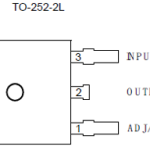
Pin Descriptions

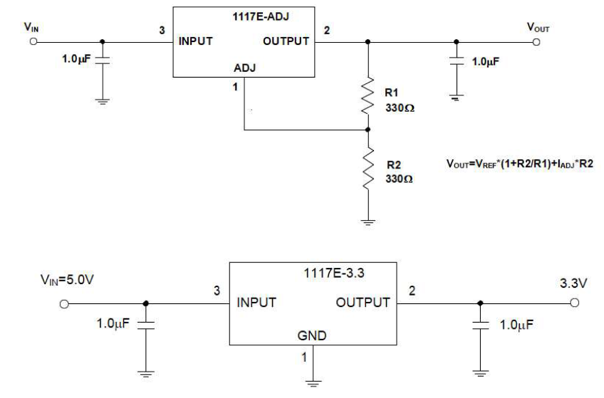
Typical Applications Circuit for 1117E
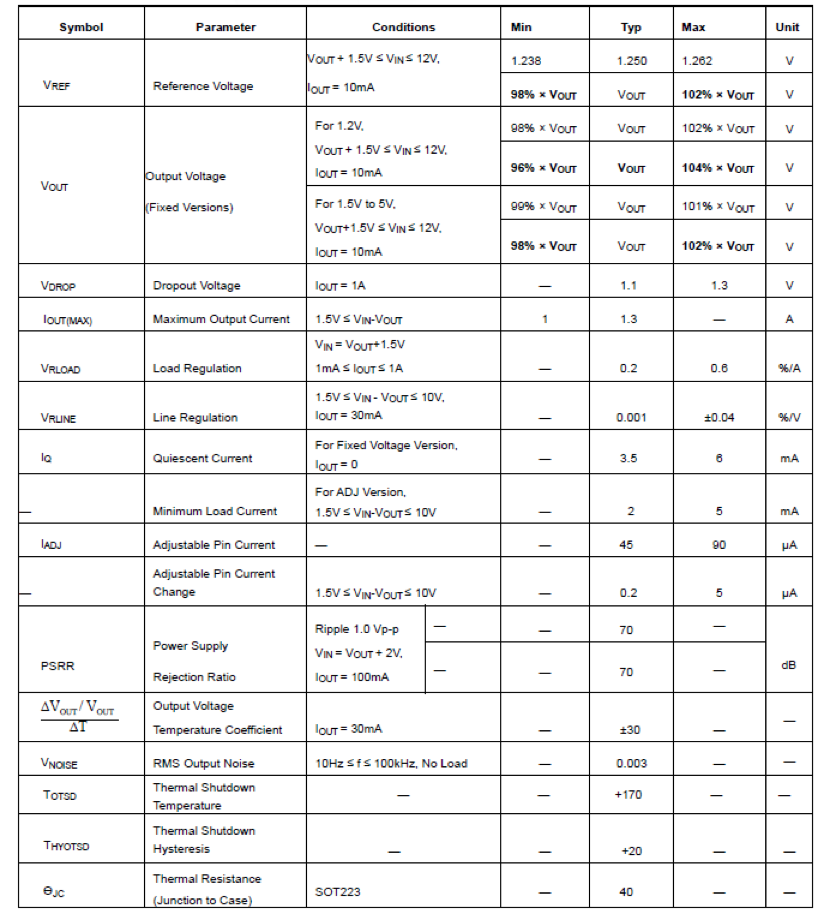
Electrical Characteristics 1117E
Features for Topdiode 1117E
- Provides ADJ Version (VREF = 1.25V) and Fixed Voltage 1.2V,1.5V, 1.8V, 2.5V, 3.3V, and 5.0V with Accuracy ±1%
- Current Limit: 1.3A (Typ.)
- Dropout Voltage: 1.1V (Typ.) @ IOUT = 1A
- Regulator Stable with Low ESR MLCC
- Excellent Line Regulation: 0.001%/V (Typ.) @ IOUT = 30mA
- Excellent Load Regulation: 0.2%/A @ IOUT = 1A
- Quiescent Current: 3.5mA
- Low Output Noise
- PSRR: 70dB
- OTSD Protection
- Operation Junction Temperature: -40℃ to +125℃
* Replace Diodes Incorporated AZ1117CH series
The advantages of the Low-dropout three-terminal regulator
The core advantages of a Low Dropout (LDO) linear regulator lie in its extremely low input-to-output voltage differential, low noise, high Power Supply Rejection Ratio (PSRR), high efficiency, and simple circuit architecture, making it ideally suited for powering portable devices and sensitive circuitry. It maintains output stability even under small input-to-output voltage differentials, thereby significantly extending battery life and enhancing power supply performance.
* Extremely Low Dropout Voltage: This is the most prominent feature of Ldos. They can operate under very small input/output voltage differentials (typically below several hundred millivolts), thereby achieving extremely high efficiency and long battery working times.
* Simple structure and space-saving: As a three-terminal device, it usually only requires input capacitors and output capacitors to operate, with few peripheral components and a small size, greatly saving PCB board space.
* Low noise and high ripple suppression ratio (PSRR): Ldos typically have excellent power supply ripple suppression characteristics (high PSRR), which can eliminate noise at the input end and ensure clean power supply to the back-end devices
* Low Quiescent Current: Modern Ldos have a very low quiescent current, which can minimize power consumption in standby mode.
* Good stability and linear/load regulation rate: It can maintain a stable output voltage even when the output current fluctuates or the input voltage changes